Tertium
Labs

Premise

Tertium LabsIssued from City Walk, London SE1Apps · Web · Design · Publishing · Support

Between two answers, the useful third

Tertium Labs researches, designs, builds and looks after mobile apps and websites. When a decision arrives framed as a choice between two imperfect options, we test the framing before we pick a side.

A glass prism on lavender paper splitting a beam of light into a spectrum
One beam in, several colours out: a fair picture of how we treat a brief.Illustrative generated image
Leader

Why a lab, and why the third option

Tertium quid is Latin for “a third something”: the thing that is neither of two known positions but resolves the tension between them. We named the studio after it because most software briefs reach us as a binary. App or website? Build or buy? Launch now or wait until it is right?

Both sides of those questions are usually reasonable. That is exactly why arguing between them rarely helps. What helps is evidence: who will use the product, how often, on which device, and what they are trying to get done. With that in hand, the shape of a better answer tends to appear.

What we actually do

We design and build iOS and Android apps, websites and web applications. We run the research and interface design that decides what those products should be. We help publish them to the App Store and Google Play or put them live on the web, and we maintain them afterwards.

Test the question before you choose the answer.

How that feels as a client

Early on you will hear a lot of questions from us, and you will see your assumptions written down and sorted by how risky they are. In the middle you will receive working builds at regular intervals, each with a short note on what changed and what we learned. At release, you will get a checklist rather than a celebration.

Throughout, everything we make is held in your name: code repositories, developer accounts, designs and documentation. You can continue without us at any point, which we think is the only honest basis for working together.

Interactive

The third-option explorer

Pick a familiar product dilemma. The explorer shows the two positions people usually argue about, and the kind of third option our research often points towards. These are general patterns, not advice for your specific case.

The practice

Five lines of work

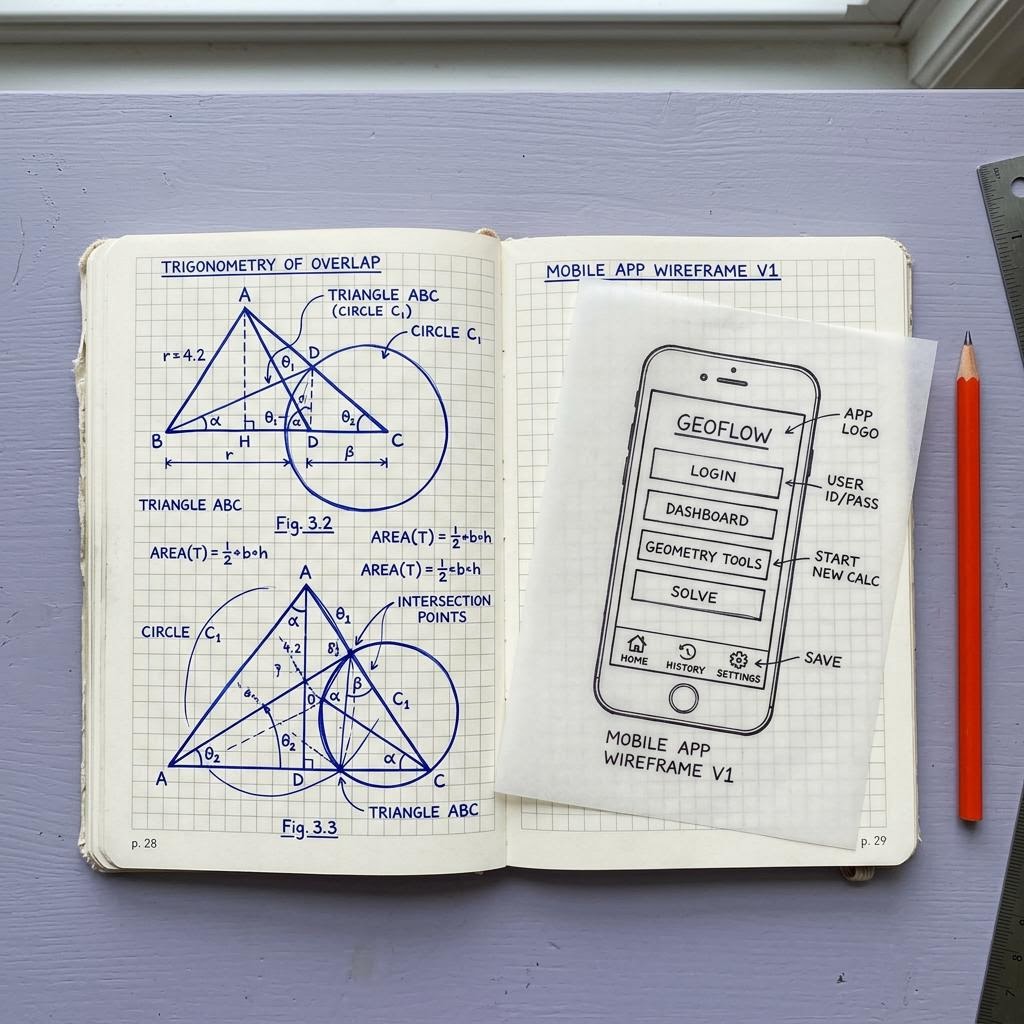
Lab notebook with geometric diagrams in blue ink and a tracing-paper app wireframe

Illustrative generated image

Interface design starts the work

Before anything is built we watch people attempt the task, reframe the problem from what we see, sketch widely, and test clickable prototypes with a handful of participants. The output is a tested design and a documented set of components, so the build matches the intent.

  • Research notes and a findings summary
  • Journey maps and a tested prototype
  • Component library with every state shown
Interface design

Mobile applications

Cross-platform where a single codebase serves you well; native Swift and Kotlin where hardware or performance demand it. Signed test builds throughout, accessibility checked with VoiceOver and TalkBack.

Mobile

Web development

Company sites, content platforms and web applications with logins and data. Semantic, quick on modest phones, and built with as few dependencies as the job allows.

Web

Publishing

Developer accounts in your name, honest store listings, privacy declarations built from a data inventory, and website launches with a rollback plan.

Publishing

Support

Monthly dependency and security updates, yearly operating-system compatibility work, and a structured way to report faults. Choose maintenance only, maintenance with an improvement allowance, or work quoted on request.

Every engagement ends with a handover complete enough for another team to continue: code, credentials, designs, a dependency register and a maintenance guide.

Support
Interactive

Write a hypothesis

Every feature is a bet that something will change for someone. We write that bet down before estimating it, which makes priorities easier to argue about and easier to drop. Draft one below; nothing is sent to us.

Drafts persist on this device only if you accept optional storage.

Protocol

How an engagement runs

  1. Question

    You describe the problem. We ask what is known, what is assumed and what nobody knows yet, and write the answers down.

    You receive a short assumptions list, sorted by risk.

  2. Frame

    A discovery period of research and prototyping. It may confirm the brief or change it, which is the cheapest moment for change.

    You receive hypotheses, a tested prototype and a scoped plan.

  3. Build

    Short cycles, each ending with a working demonstration you can install or open, and a note on progress, learning and risk.

    You receive builds, cycle notes and a decision log.

  4. Release

    Testing against an agreed device list, accessibility checks, store submission or go-live, monitoring and a rollback plan.

    You receive a release checklist and live product.

  5. Continue

    Maintenance and improvement, or a clean handover to your own team.

    You receive documentation and everything in your name.

Corrections & care

When something goes wrong

Live software drifts as operating systems, browsers and libraries change. Support keeps it current; a clear report gets faults fixed quickly. We read requests Monday to Friday, 09:00–18:00 London time.

Report a fault

What a helpful report includes

Expected
What should have happened.
Observed
What happened instead, with any message shown.
Reproduce
The steps that lead to it, as precisely as you can.
Context
Device, operating system or browser, and app version.

Please leave out passwords and your customers' personal data.

From the library

Three sources worth reading first

Accessibility is a design input

The W3C’s WCAG 2.2 overview explains the standard we design and test against, in readable terms. W3C WAI

Read the rules before you design

Apple’s App Store Review Guidelines shape what an iOS app may do. Reading them early saves rejections later. Apple Developer

Collect only what you need

The ICO’s UK GDPR guidance covers data minimisation, lawful basis and retention. ico.org.uk

The full library, filterable by type

Letters

Questions we are often asked

Will you just build what we specify?

We will build to an agreed specification, but we will question it first. If research suggests a different approach, we explain why and you decide.

Do we have to start with research?

No. If you already have evidence and tested designs, we review them and move to building. If not, a short discovery is usually cheaper than building the wrong thing.

Who owns what you make?

You do. Repositories, developer accounts, hosting and designs are created in your organisation's name from the start.

Can you guarantee store approval?

Nobody can; Apple and Google decide. We prepare thoroughly, answer reviewers promptly and never promise a date that depends on their queue.

Can we visit the studio?

Our City Walk address is for correspondence. We work mainly remotely and arrange in-person sessions in advance.

Can you take over an existing product?

Yes. We begin with a review of code, dependencies, accounts and release process, then report what is sound and what is at risk.

Colophon

Bring us the question, not just the brief

Tell us what you are trying to decide or build. We reply in working hours with questions, a framing, or a suggested first step.

team@tertiumlabs.link
+44 7888 619205
Monday–Friday, 09:00–18:00